The alarming connection between alcohol outlets and gender-based violence in Eastridge
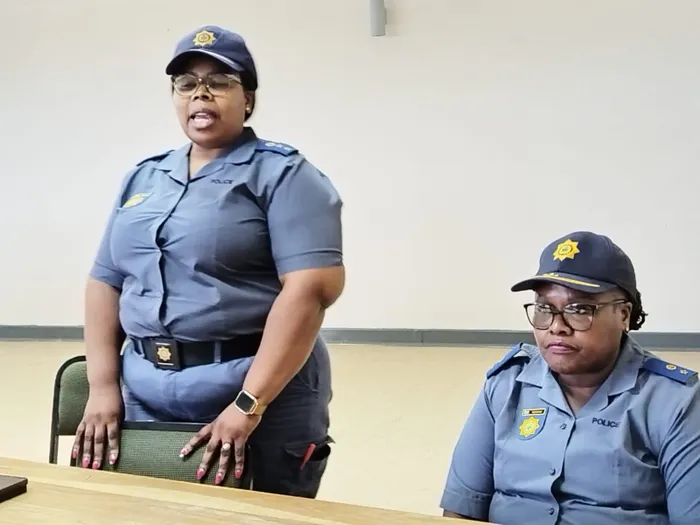
Mitchell's Plain's head of visible policing, Colonel Wendy Nciweni (standing), and Lentegeur visible policing Commander Lieutenant Colonel Pumza Mfexane (seated)
Image: Phiri Cawe
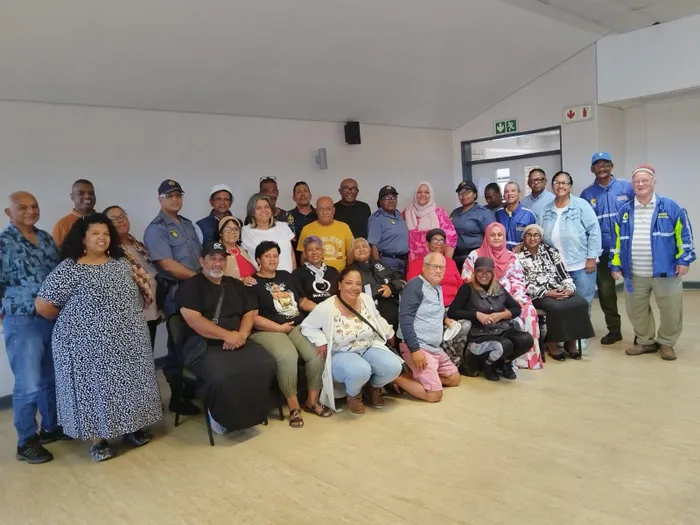
Community leaders and non governmental organisations of Mitchell's Plain are not happy with liquor outlets in their area.
Image: Phiri Cawe
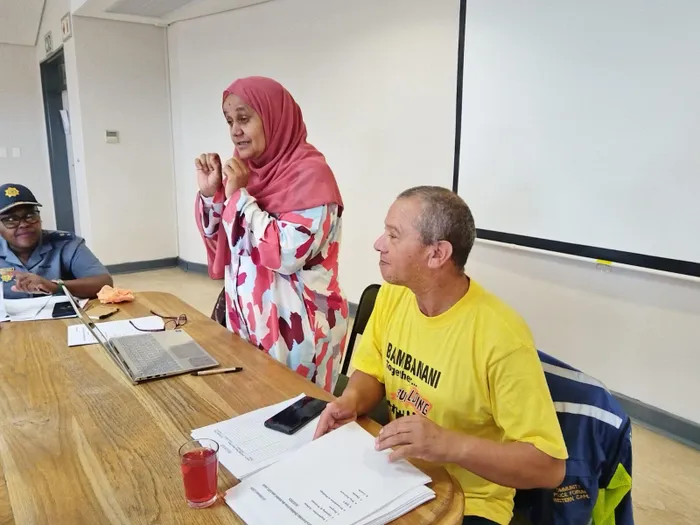
Aadielah Maker Diedericks presented a report about Eastridge on Saturday, February 14, at the Lentegeur police station, with Michael Jacobs looking on.
Image: Phiri Cawe
Researchers from the Southern African Alcohol Policy Alliance (SAAPA) have identified a concerning link between the high number of alcohol outlets and gender-based violence (GBV) cases in Eastridge.
Presenting the findings at Lentegeur Police Station on Saturday, February 14, researcher and public health advocate Aadielah Maker Diedericks highlighted that alcohol remains widely accessible in South Africa due to numerous outlets, extended trading hours, and aggressive marketing strategies.
She said that this easy access often fuels misuse, particularly among young people, contributing to alcohol-related harm such as violence, road crashes, and GBV.
Ms Diedericks said that while men can be both perpetrators and victims of GBV, they remain predominantly responsible for violence against women and children. “In Africa, about one in three people consume alcohol, yet our continent carries the highest burden of disease and injury linked to alcohol use,” she stated.
She added that alcohol-related harm is influenced not only by consumption levels but also by social and economic factors such as poverty, inequality, and unemployment.
The study analysed alcohol outlet density alongside reported GBV incidents to determine how proximity and availability may influence violence.
Researchers identified 36 liquor outlets in Eastridge: eight licensed, 25 unlicensed, and three with unclear status. Some licensed outlets were found to be supplying alcohol to unlicensed traders.
Eastridge is home to 30 churches and 17 schools, including pre-schools and crèches, underscoring the proximity of liquor outlets to community institutions. The area was divided into five zones for analysis - zone 1 and 2 in the AZ Berman Drive vicinity; zone 3 in the Don Carlos Street vicinity, and zones 4 and 5 on Spine Road and Imperial Crescent.
High-density zones
Zone 5 recorded the highest concentration of outlets, accounting for 27% of all outlets. Unlicensed outlets made up the largest share overall, at 45%, while 22% were licensed and 33% had an uncertain status. Most outlets (97%) sold alcohol for off-site consumption only, with just one outlet allowing both on- and off-site consumption.
The study found that zones with more alcohol outlets — particularly zones 1, 3, and 5 — also recorded higher numbers of reported GBV cases. While the relationship is not strictly one-to-one, the pattern suggests that areas with more outlets tend to report more incidents. Across all zones, women were the most frequently reported victims.
Community response
The research forms part of a broader regional study examining links between alcohol availability, trading times, and GBV across Botswana, Lesotho, Namibia, and South Africa. It also highlighted mental health challenges in communities, noting that some residents turn to alcohol as a coping mechanism, which can contribute to harmful behaviour.
The report recommended stronger community education and awareness, tighter regulation and oversight of outlets, limits on trading hours where harm is concentrated, improved mental health support, and investment in social and economic programmes to reduce vulnerability.
Community activist and Mitchell’s Plain Community Police Forum chairperson Michael Jacobs said that the findings should serve as a wake-up call.
He criticised the lack of participation by some activists and the dysfunction of local drug action structures, urging residents to take responsibility.
“Without this study, we would not know how our people are drowning. We want to change the conditions of our communities,” he said.
Wendy Nciweni, visible police commander for Mitchell’s Plain, acknowledged that Eastridge falls within the precinct and said she was committed to studying the findings and implementing recommendations. She added that alcohol abuse remains a major challenge.
Residents who attended the presentation called for more recreational facilities, stronger community mobilisation, and closer cooperation with law enforcement. They also urged authorities to clamp down on illegal liquor outlets and strengthen partnerships between police and the community.
Find Plainsman on TikTok and Instagram @ccmonlineza