Residents of Pelican Heights march to reclaim safety from gangs and drugs
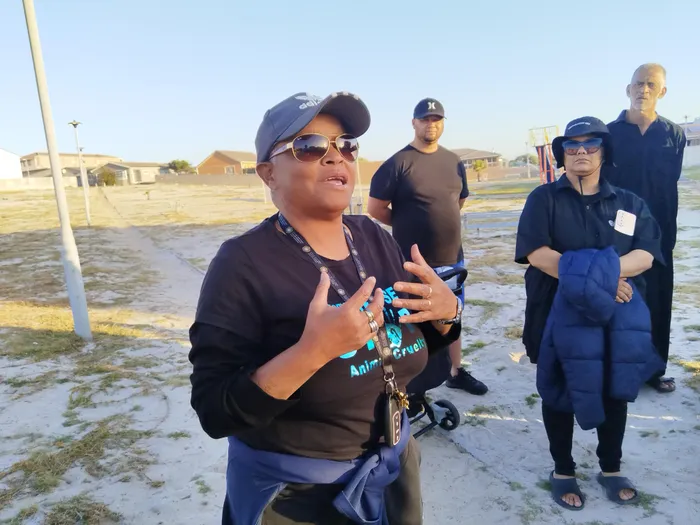
Councillor Gerry Gordon was positive about the march and the Pelican Heights community.
Image: Phiri Cawe

Captain Stephen Knapp left, receiving a memorandum from the security co-ordinator of Pelican Heights, Mogamat Panday.
Image: Phiri Cawe
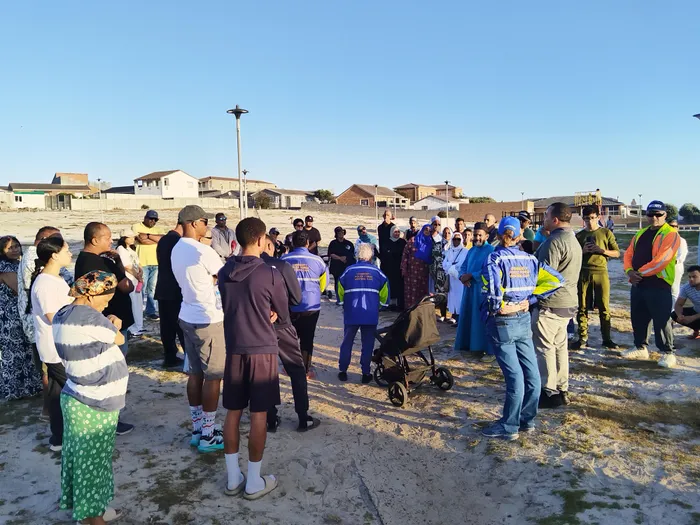
Pelican Heights residents met at the local play park to hand over the memorandum of demands to the police.
Image: Phiri Cawe
Residents of Pelican Heights took to the streets on Wednesday, December 10, chanting, “Pelican Heights says no to drugs and gangs.”
The peaceful demonstration, led by dedicated community members and local crime-fighting organisations, aimed to raise alarm over the rise of drug dens, gangsterism, and crime in the area.
The march began at the corner of Seagull and Osprey Roads, then proceeded to the local park, where a memorandum demanding immediate intervention was handed to Muizenberg police representative, Captain Stephen Knapp.
The memorandum called for swift action from the government, local organisations, residents, and law enforcement agencies to curb the escalating criminal activity.
Throughout the march, community leaders and residents addressed the crowd, voicing frustration over unchecked drug dealing and the growing gang presence.
Speakers emphasised the need to strengthen the Community Policing Forum (CPF), revitalise neighbourhood watches, form street committees, and increase police resources to restore safety in the suburb.
Ismail Janodien, chairperson of The Pelican Heights Civic Association, the organisation that initiated the march, stated that the recent spike in crime is unusual and worrying for a community long known for its tranquillity.
He noted that drug peddling and gangsterism have taken root at an alarming pace.
“We have discovered that some domestic workers are being used to run drugs,” he said.
“Pelican Heights used to be safe; it is no longer safe. The situation is bad. There is a domestic worker who works for someone here - she is a runner. Today, we are sending a message that enough is enough.”
Mr Janodien urged young people to reclaim their future and reject a culture that glorifies violence. Recalling a message written after a 17-year-old boy was killed - “the brave die young” - he warned that such phrases can promote harmful narratives that young people may internalise.
“What is that? Young people glorifying death. Today, we are saying: it stops here.”
Ward councillor Gerry Gordon joined the march and praised the community’s determination to take ownership of their neighbourhood’s safety.
“I am elated and honoured to see a community stepping up,” she said. “Part of what needs to happen is collaboration. We must be together. Your presence shows that this is how we begin to tackle the problem.”
She also urged residents not to stop at handing over the memorandum but to maintain pressure on authorities to ensure lasting change.
In a show of solidarity, members of the Strandfontein CPF participated in the march and delivered messages of support.
Reverend Garlen Fredericks from the Strandfontein Crime Prevention Unit said they joined to strengthen ties with their neighbours and support a proactive approach to crime prevention.
“Pelican Heights is a good area, and drugs and gangs must be stopped before they take root,” he said. “We are here to raise awareness about what could become a serious situation. The community here is sensitive and proactive - they want to prevent these elements from entering.”
After accepting the memorandum, Captain Knapp commended residents for standing up for their community. He described Pelican Heights as a “larney area” that historically experienced little crime, making the recent developments especially concerning.
“It is encouraging when the community rises and says, ‘Let’s do this together,’” he said.
“The solution has to come from this community. It cannot come only from me or the station. There is nothing we cannot solve if we work together.”
He added that meaningful progress would not take months if residents remained united.